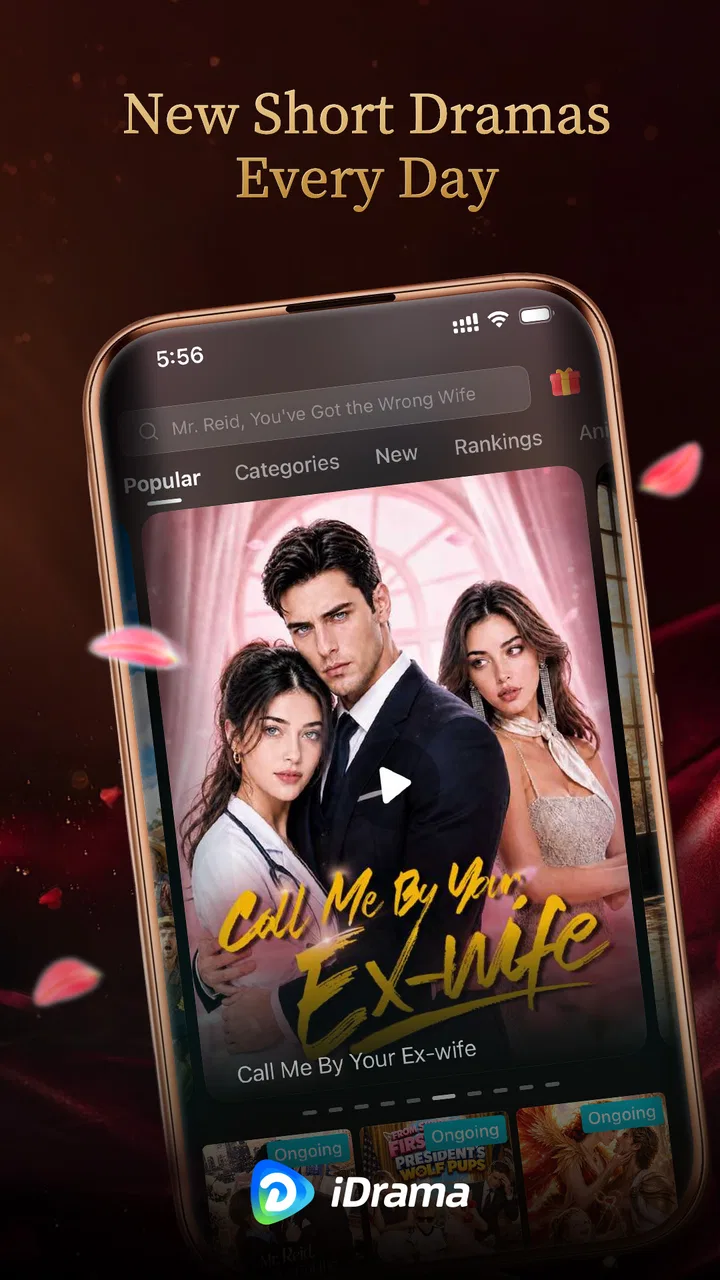
iDrama – Short Dramas & Reels
- 4.7
- Rating
- 10.00M
- Installs
- Free
- Price

 Analysis by App-foxy
I tried iDrama – Short Dramas & Reels as an entertainment app for those moments when I want a complete story without committing to a full-length series. Its focus is short original dramas, presented in quick episodes that suit a phone-first viewing habit. That sounds simple, but the format changes how I judge it: the important questions are not only whether the stories are enjoyable, but also whether the app gives me enough control over viewing, spending, and account decisions.
My overall impression is positive but selective. The app is easy to understand, free to install, and clearly aimed at people who enjoy dramatic twists in small portions. GOODDRAMA has built the experience around frequent, compact viewing rather than long sessions in front of a television. I can see the appeal for a commute, a lunch break, or a few minutes before bed. At the same time, anyone who dislikes cliffhangers, rapid story pacing, or the possibility of in-app purchases should approach it with a little more care.
How iDrama fits into everyday viewing
The biggest difference between this app and ordinary streaming services is the shape of the content. Instead of choosing a film or a long episode and settling in, I can open the app with a much smaller time commitment in mind. A short drama works well when I have just enough attention for one scene or one episode, but not enough patience for a traditional television format.
You May Also Like

 Blood Strike: 2.5 Anniversary
Blood Strike’s Loadouts Turn Every Drop Into a Tactical Gamble
A close look at Blood Strike’s custom loadouts: how fast access to signature weapons reshapes its battle royale rhythm, rewards preparation, and narrows the gap between fights.

 Pandora - Music & Podcasts
Pandora’s Music Is Easy to Start, but Harder to Recover
Pandora’s strength is its low-effort path from a seed to a station. Its weak spot is how much confidence it asks you to place in connection, setup, and quiet recovery.

 8 Ball Pool
 Is Built on Rivalries, Rematches, and Routine
A close look at the rivalries, rematches, shared routines, and unanswered safety questions that turn a quick pool match into a persistent mobile community.

 Samsung Music
’s Quiet Strength Is Playing What You Already Own
Its reach comes less from spectacle than from dependable access to a personal library. That simplicity is both the app’s strongest retention engine and its ceiling.

 AccuWeather: Weather Radar
AccuWeather Review: A Quick, Clear Forecast for Everyday Decisions
For everyday plans, the best forecast is the one you can understand quickly. AccuWeather makes rain timing, radar, and local conditions easy to act on, with a few trade-offs.

 Hill Climb Racing
Why Hill Climb Racing Still Turns Crashes Into One More Run
A tiny car, a bumpy hill and one more upgrade: Hill Climb Racing keeps resurfacing because its simple chaos makes every near-miss feel personal.
More From Our News Desk



That makes it particularly useful in situations where regular streaming feels excessive. I might watch while waiting for an appointment, during a short break from work, or while having a quick coffee. The experience is more focused than casually scrolling through social media, yet lighter than starting a full series on a larger platform. The stories are designed to keep momentum, so the app is best used when I want immediate emotional movement rather than slow world-building.
The trade-off is that short-form drama has less room for subtle development. Characters may be introduced quickly, conflicts can arrive almost immediately, and endings often encourage me to continue. I personally enjoy that urgency when I am in the right mood, but it is not a replacement for a carefully paced television drama. If you prefer long conversations, gradual relationships, or detailed settings, the compact format may feel rushed.
The app belongs to the entertainment category and is free to download. It carries a Teen content rating, which is an important reminder that it is not intended as a universal children’s viewing app. Parents should make their own decision about whether the tone and themes suit a particular teenager rather than treating the free price as a sign that the content is suitable for everyone.
What the free starting point really means
“Free” is useful here because I can explore the service without paying before deciding whether the format works for me. That lowers the barrier to trying a few stories and seeing whether the presentation fits my taste. It also means I would not recommend adding payment details immediately. I would first learn how the app presents its available viewing choices and whether I am comfortable with the way continued access is handled.
In-app purchases range from $0.49 to $299.99 per item. That is a wide span, so I would treat the purchase system as a meaningful part of the experience rather than a minor detail. My practical advice is simple: check every purchase prompt carefully, use device-level purchase authentication, and avoid tapping quickly when a cliffhanger makes the next episode feel urgent. The most valuable control is the ability to pause and decide instead of letting the drama dictate the decision.
This is also where iDrama differs from a conventional subscription streaming service. A subscription usually gives me a broad library under one recurring arrangement, while a short-drama app can make individual viewing decisions feel more immediate. Neither model is automatically better. iDrama suits someone who wants small, focused stories and is willing to pay attention to viewing choices. A conventional service may be more comfortable for someone who wants predictable access to longer programs without repeated purchase decisions.
Trust starts with visible choices
When I assess an app like this, I do not assume that a polished interface tells me everything about trust. I look for the choices I can actually see and control: whether I can decide when to spend, whether the app makes its age guidance clear, whether account actions are understandable, and whether I can avoid rushing through prompts. Those practical details matter more to me than broad claims about convenience.
iDrama’s Teen rating gives me a useful starting point for judging the audience. The developer is GOODDRAMA, and the app has reached more than one million installs with an average rating of 4.7 from around 101 thousand ratings. Those figures show that the format has attracted substantial attention, but popularity is not the same as a guarantee that every viewer will like the stories or feel equally comfortable with the purchase flow.
I also pay attention to the difference between a rating and a personal fit. A high average can indicate that many people enjoy the app, yet a viewer who wants mature, slow-burn storytelling may still find it unsuitable. In my case, the strong reception made me more willing to test it, but my final judgment came from the actual viewing rhythm and the amount of control I felt I had while using it.
Account and purchase habits I would recommend
Before spending anything, I would take a minute to review the account and device settings available to me. I would confirm which account is signed in, make sure purchase authentication is enabled, and check whether other people use the same device. This is especially important on a shared phone or tablet, where an accidental tap can have consequences beyond the person watching.
I would also avoid treating a dramatic ending as a reason to buy immediately. Short dramas are naturally good at creating momentum, and that can make a purchase feel more urgent than it really is. My preferred workflow is to stop at the prompt, decide whether I genuinely want to continue, and only then proceed. If I am watching late at night or while distracted, I would close the app and return later rather than making a rushed choice.
Another useful habit is to keep entertainment spending separate from ordinary app use. I would set a personal limit before exploring a large catalog and record purchases through the device account history. That does not change how the stories work, but it gives me a clearer view of what I am choosing. For a free app with optional purchases, this kind of personal boundary is more reliable than assuming I will remember every small transaction.
Data-sensitive moments deserve attention
Any entertainment app can involve moments where I need to make a decision about access, accounts, or purchases. I prefer to handle those moments deliberately rather than granting permissions or accepting prompts automatically. I would read the wording on each request, allow only what is necessary for the action I am trying to perform, and revisit device settings if I later change my mind.
I do not treat the presence of an app in a major store as a substitute for reading its privacy and account information. My own approach is to inspect the app’s visible privacy disclosures and the platform’s permission controls before using it heavily. If a request appears unrelated to watching short dramas, I would pause and look for an explanation instead of accepting it out of habit. This is a sensible practice for iDrama and for any entertainment service used regularly.
Notifications are another small but important control. A short-drama app can be tempting to open whenever a new episode or story prompt appears, but I may not want entertainment alerts interrupting work, sleep, or family time. I would begin with notifications limited to what I actually find useful, then turn them down or off if they start shaping my schedule. The ability to decide when to watch is part of maintaining a healthy relationship with the app.
On a shared device, I would be especially careful about account visibility and payment access. I would not leave a purchase-ready account open for someone else to use, and I would check the active profile before beginning a session. These are ordinary precautions, but short episodes make it easy to open the app casually and forget that account and payment settings still matter in the background.
Where the viewing experience works best
iDrama is strongest when I use it as a deliberate short break. A realistic example is a train ride with only a limited amount of time available: I can watch part of a story, stop when I need to leave, and return later when I am ready. The format also works for someone who finds traditional streaming libraries overwhelming. Instead of spending a long time choosing a film, I can sample a compact drama and quickly decide whether its tone suits me.
It can also be a good companion for viewers who enjoy emotional hooks and frequent turns. The short format encourages a faster relationship with each story, and I do not need to remember a large cast or a complicated backstory before getting started. That makes it approachable for casual viewing, especially when I want something more narrative than short social videos.
My less successful sessions happened when I expected the depth of a standard series. The compressed structure leaves less space for quiet scenes and detailed character motivation. I also found that the urge to continue can work against a planned five-minute break. If I am tired, easily distracted, or trying to reduce screen time, the app may be less suitable than an audiobook, a single self-contained video, or a service where I can choose a longer program and stop at a natural ending.
For families, the Teen rating should guide the decision. I would not hand the app to a young child simply because the download costs nothing. A teenager may appreciate the fast stories, but parents should still consider the themes, the viewing habits, and the purchase controls on the particular device.
Performance expectations and practical setup
The current version is 1.24.4, and the app supports devices running Android 7.0 or later. That broad operating-system reach makes it accessible to people who are not using the newest phone, although the actual comfort of viewing will still depend on the device’s display, storage, battery condition, and connection. I would update the app through the official store and keep the operating system reasonably current where possible.
For a smoother session, I would begin with a stable connection and enough battery for more than one short episode. Short content can encourage repeated openings, which may use more battery than I expect over the course of a day. If I am traveling, I would not assume that every viewing situation will be equally convenient; I would check how the app behaves under my own connection conditions before relying on it during a journey.
I would also keep the screen brightness and notification settings comfortable. Because the stories are designed for close phone viewing, it is easy to hold the device nearer than I would with a television. A short session can quietly turn into a longer one, so I prefer taking regular breaks and avoiding the app when I should be sleeping. These are not flaws unique to iDrama, but the rapid episode structure makes them especially easy to overlook.
Who should choose it, and who should skip it
I would recommend iDrama to someone who likes original short dramas, quick emotional payoffs, and entertainment that fits between larger parts of the day. It is a good match for viewers who enjoy discovering stories in small portions and who are comfortable making careful decisions around optional purchases. The free entry point makes experimentation straightforward, while the Teen rating helps set a basic expectation about the intended audience.
I would be more cautious recommending it to someone who wants one predictable monthly cost, a large selection of conventional films, or complete control over pacing. Viewers who dislike cliffhangers may find the short structure frustrating, especially when a story ends just as the conflict becomes interesting. People trying to avoid impulse spending should also establish purchase protections before exploring deeply.
The app is not my first choice for a family movie night, a long uninterrupted viewing session, or a viewer searching for highly detailed drama. In those situations, a traditional streaming platform or a free video service with longer, self-contained programs may be a better fit. iDrama has a narrower purpose, and it works best when I accept that purpose rather than expecting it to behave like a general entertainment library.
My careful verdict after using the app
iDrama succeeds because it understands a real viewing habit: many people want a story, but only have a few minutes at a time. GOODDRAMA’s short-drama approach gives the app a clear identity, and the strong user rating suggests that the format resonates with a large audience. I found it easy to imagine returning for a quick episode during an otherwise empty part of the day.
My recommendation comes with boundaries. I would keep the app free to explore, but I would not rush into purchases. I would review visible account and privacy choices, control notifications, protect payment authentication, and remember that the Teen rating matters. Those steps do not make the experience complicated; they simply keep my viewing decisions separate from the pressure of the next dramatic moment.
In the end, I see iDrama as a focused entertainment option rather than a complete alternative to mainstream streaming. If you enjoy compact original stories and want something built around quick sessions, it is worth trying. If you want slow storytelling, one predictable subscription, or a completely passive viewing experience, I would choose another service. The best reason to use iDrama is its short-drama format; the best reason to be cautious is the need to stay actively in control of how you watch and spend.
FAQs for iDrama – Short Dramas & Reels
01What is iDrama – Short Dramas & Reels?
iDrama is a mobile app offering a collection of short dramas and reels designed for quick entertainment. It features a diverse range of content, including romance, action, and comedy, catering to a wide audience. The app is available for both Android and iOS, allowing users to enjoy engaging stories on-the-go.
02Is iDrama free to use, or does it require a subscription?
iDrama offers both free and premium content. While users can access a selection of short dramas and reels for free, subscribing to the premium version provides an ad-free experience and access to exclusive content. Subscription details, including pricing, are available within the app, allowing users to choose the plan that fits their needs.
03How user-friendly is the iDrama app interface?
iDrama is designed with a user-friendly interface that is easy to navigate. The app features a clean layout with categories and search options, making it simple to find and watch your favorite dramas and reels. Users can also create playlists, bookmark shows, and receive personalized recommendations based on their viewing history.
04What types of content can I expect from iDrama?
iDrama offers a wide variety of short dramas and reels, including genres such as romance, thriller, comedy, and drama. The content is produced by both independent creators and professional studios, ensuring a mix of unique and high-quality productions. New content is regularly added, keeping the library fresh and engaging.
05Can I download content from iDrama for offline viewing?
Yes, iDrama allows users to download selected content for offline viewing. This feature is particularly useful for those who want to watch their favorite dramas and reels without an internet connection. However, the availability of downloadable content may vary, and some exclusive content might require a premium subscription.
Pros
- Wide variety of genres available.
- User-friendly interface design.
- High-quality video streaming.
- Regularly updated content library.
- Offline viewing option available.
Cons
- Limited free content access.
- In-app ads can be intrusive.
- Requires stable internet connection.
- No support for casting to TV.
- Subscription can be pricey.

iDrama – Short Dramas & Reels
Gallery